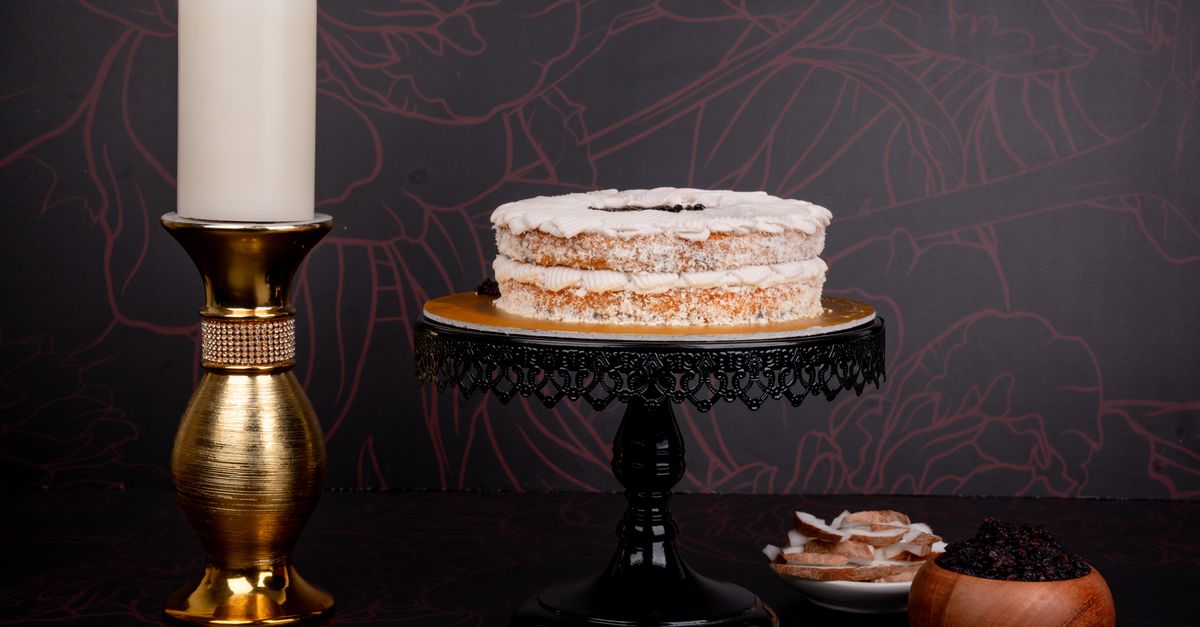
Castella reads like a short recipe: eggs, sugar, bread flour, honey and mirin. The list is not where it goes wrong. The batter is. Two bakers can weigh the same grams and still pull out one cake that springs back and another that sinks at the middle, and the difference usually sits in the order of mixing and how far the eggs were taken.
Start by warming the honey and mirin together until they run thin, then let them come back to room temperature. Cold honey seizes the batter and drags the fold. Bread flour, not cake flour, is what gives castella its fine, elastic crumb, so sift it twice and keep it close to the bowl before you begin whipping.
How far to take the eggs
Whip whole eggs with the sugar over gentle heat until the mixture is barely warm to the touch, then move off the heat. Beat until the ribbon holds for a slow count of three before it disappears into the surface. Stop there. Over-whipped eggs look glossy and stiff, and they fold into the flour in clumps that leave streaks of dense crumb at the bottom of the pan.
The fold, and what the surface should look like
Add the flour in three additions, folding with a wide spatula from the base of the bowl. The batter should fall from the spatula in a thick ribbon that settles in about two seconds. If it pours like water, the eggs were over-beaten or the flour was under-folded. If it sits in stiff peaks, you have lost air and the cake will bake flat.
Two failures readers write in about
A dense bottom layer almost always means the flour was not fully folded in, or the pan sat too low in the oven and the base set before the batter could rise evenly. Move the rack to the middle and check with an oven thermometer rather than the dial, since a Johannesburg kitchen at altitude often runs hotter than the setting suggests.
A top that browns before the centre sets is a heat problem, not a batter problem. A water bath steadies the temperature around the pan and keeps the surface from catching. If the top is already dark and the centre still wobbles, lay a sheet of foil loosely over the pan and give it another few minutes.
When it is done
The bake is finished when the centre springs back under a light press and the sides pull slightly away from the paper. Cool the pan upside down on a rack so the top does not sink as it settles. Grams-first measurements keep the sugar-to-flour balance stable across brands of local flour, which matters more here than the pan you use.